The question of whether contemporary art has descended into nihilism under the influence of postmodernism is one that has sparked heated debates in galleries, academic circles, and even casual conversations among art enthusiasts. As we navigate through the 21st century, the legacy of postmodern thought continues to cast long shadows over artistic production, raising fundamental questions about meaning, value, and purpose in creative expression.
Postmodernism's fractured lens has undeniably reshaped how we approach art. The movement's skepticism toward grand narratives and its embrace of fragmentation have liberated artists from traditional constraints, but this freedom comes at a cost. When all meanings are considered equally valid and no ultimate truth is acknowledged, art risks becoming a hall of mirrors reflecting nothing but its own emptiness. The Duchampian ready-made, once revolutionary in its challenge to artistic conventions, now threatens to become a tired cliché in an era where anything can be art - but where nothing necessarily matters.
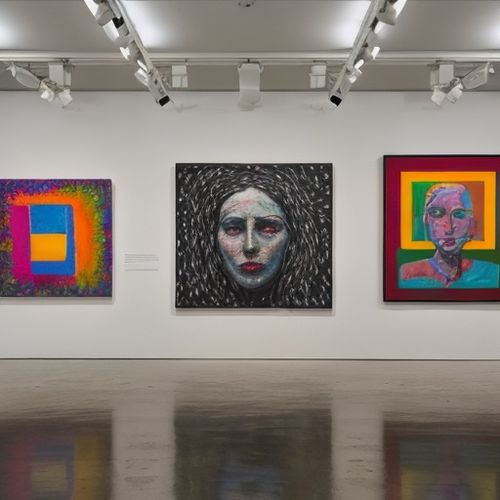
Walk through any major contemporary art biennale, and you'll encounter works that seem deliberately opaque, as if their primary purpose is to resist interpretation rather than communicate. This tendency toward willful obscurantism raises legitimate concerns. When art becomes entirely self-referential, existing only to comment on its own status as art, it risks alienating audiences and retreating into an elitist bubble. The paradoxical result is that art meant to challenge hierarchies often ends up creating new ones - between those "in the know" and those left bewildered.
Yet to dismiss all contemporary art as nihilistic would be to overlook its genuine achievements. The postmodern turn has enabled important critiques of power structures, expanded the range of voices in the art world, and challenged our assumptions about beauty and value. Feminist art, postcolonial art, and queer art have all flourished in the space opened up by postmodernism's questioning of dominant paradigms. The movement's emphasis on difference and otherness has made the art world more inclusive, even as it has made its products more challenging.
The tension lies in whether this critical function can be sustained without sliding into complete relativism. When all perspectives are equally valid, how does art maintain its capacity to shock, to challenge, to transform? The danger is that art becomes like the marketplace of ideas it often critiques - a space where everything is available but nothing has particular weight, where provocation becomes routine and therefore meaningless. The scandalous becomes predictable, the transgressive becomes fashionable, and the avant-garde becomes just another style.
Some artists have responded to this predicament by turning toward what might be called post-postmodern sincerity - works that acknowledge the lessons of postmodern skepticism but attempt to rebuild meaning rather than deconstruct it. These artists grapple with the void without surrendering to it, creating works that are self-aware but not cynical, critical but not despairing. Their approach suggests that contemporary art may be moving beyond the nihilistic impulses of late postmodernism toward something more complex and hopeful.
Technology's rapid advancement adds another layer to this discussion. In the digital age, where images circulate endlessly and lose their context, the question of artistic meaning becomes even more fraught. The internet has democratized art creation and distribution but has also contributed to a sense of overload and exhaustion. When we're bombarded with thousands of images daily, how can any single artwork claim significance? This environment both reflects and exacerbates the nihilistic tendencies in contemporary art.
Educational institutions bear some responsibility for the current state of affairs. Art schools often prioritize concept over craft, theory over technique, producing generations of artists skilled at writing artist statements but less capable of creating visually compelling work. This imbalance has led to art that reads well in catalogues but fails to resonate on a sensory or emotional level. The result is work that may be intellectually sophisticated but aesthetically impoverished - another manifestation of the disconnect between art and lived experience.
The commercial art world complicates matters further. As contemporary art becomes big business, the market's demands influence artistic production in ways that often contradict the anti-establishment rhetoric of much postmodern-inspired work. The paradox of million-dollar artworks critiquing capitalism is too obvious to ignore. This contradiction doesn't necessarily invalidate the work's content, but it does raise questions about art's capacity to maintain critical distance in an era of rampant commodification.
Perhaps the most promising development is the growing recognition that the postmodern paradigm may have run its course. Artists, critics, and theorists are increasingly exploring ways to move beyond the endless deconstruction that characterized late 20th-century art. This doesn't mean a simple return to pre-modernist certainties, but rather an attempt to forge new paths that acknowledge the insights of postmodernism while refusing its more destructive tendencies. In this sense, contemporary art may be on the verge of rediscovering its purpose after decades of uncertainty.
Ultimately, the question of nihilism in contemporary art cannot be answered definitively. Like all important cultural phenomena, art reflects the contradictions and anxieties of its time. If some contemporary work seems empty or cynical, other work pulses with urgency and meaning. The challenge for artists and audiences alike is to distinguish between the two - to recognize when skepticism becomes an excuse for laziness, and when it serves as a genuine tool for insight. The health of art depends on this discernment.
As we look to the future, it's clear that art will continue to evolve in response to our changing world. The legacy of postmodernism will undoubtedly shape this evolution, but it need not determine it. The best contemporary art has always found ways to acknowledge complexity without succumbing to despair, to question foundations without denying the possibility of meaning. In this delicate balance lies the hope that art can remain vital without falling into the nihilism that some see as postmodernism's inevitable conclusion.
By Sophia Lewis/Apr 12, 2025
By Victoria Gonzalez/Apr 12, 2025

By Olivia Reed/Apr 12, 2025
By Sophia Lewis/Apr 12, 2025

By Megan Clark/Apr 12, 2025
By Emily Johnson/Apr 12, 2025
By Benjamin Evans/Apr 12, 2025
By Rebecca Stewart/Apr 12, 2025
By Grace Cox/Apr 12, 2025
By Grace Cox/Apr 12, 2025
By Sarah Davis/Apr 12, 2025
By Emma Thompson/Apr 12, 2025
By Michael Brown/Apr 12, 2025
By Lily Simpson/Apr 12, 2025

By John Smith/Apr 12, 2025
By Lily Simpson/Apr 12, 2025
By Rebecca Stewart/Apr 12, 2025
By Emily Johnson/Apr 12, 2025
By Natalie Campbell/Apr 12, 2025
By Jessica Lee/Apr 12, 2025