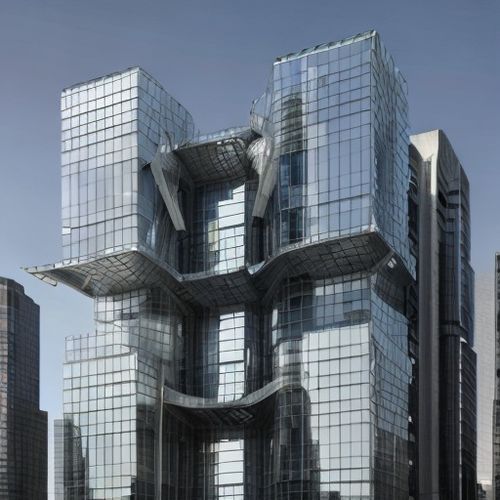
The urban skyline is undergoing a quiet revolution as architects and engineers harness the power of photochromic glass to create buildings that literally paint themselves with light. These dynamic facades, once confined to the realm of conceptual art, are now emerging as functional architectural elements that respond to their environment in real time. The marriage of advanced materials science with architectural vision has birthed structures that don't just stand against the elements but converse with them.
At the heart of this innovation lies photochromic technology - glass embedded with special molecules that change their molecular structure when exposed to ultraviolet light. Unlike traditional static facades, these living surfaces transform throughout the day, their transparency and color shifting with the sun's intensity. The effect is nothing short of magical; entire buildings appear to breathe as their skins ripple with organic patterns that mirror cloud movements and sunlight angles.
What makes this technology particularly groundbreaking is its passive nature. Unlike energy-intensive digital displays or mechanical shading systems, photochromic facades require no electricity to operate. The glass contains silver halide or other light-sensitive compounds that automatically darken when hit by UV rays, then gradually return to clarity as light diminishes. This self-regulating mechanism creates an ever-evolving architectural canvas that responds to environmental conditions with elegant precision.
The artistic possibilities are as limitless as the patterns of sunlight itself. Architects can program specific responses by varying the density and distribution of photochromic particles during manufacturing. Some designs employ gradient patterns that create ombre effects across the facade, while others use pixel-like concentrations that produce dappled light patterns reminiscent of sunlight filtering through leaves. The most sophisticated implementations can even create the illusion of depth, making flat surfaces appear three-dimensional as shadows move across them.
Beyond their aesthetic appeal, these living facades serve important functional purposes. The self-tinting properties provide natural temperature regulation, reducing cooling loads by up to 30% in sunny climates. This passive solar control translates to significant energy savings and improved occupant comfort. The glass also filters harmful UV radiation while maintaining visible light transmission, creating healthier indoor environments protected from the sun's damaging effects.
Current implementations range from subtle to spectacular. The Al Bahr Towers in Abu Dhabi feature a responsive facade inspired by traditional Islamic latticework, where hundreds of photochromic panels open and close like flowers tracking the sun. In London, a experimental office building uses nanoparticle-infused glass that transitions from crystal clear to deep blue depending on sunlight intensity, creating the illusion of the building dissolving into the sky on overcast days.
The technology does face challenges that designers must navigate. Response times can vary based on glass composition and thickness, requiring careful calibration to achieve desired aesthetic effects. There's also the matter of durability - while modern photochromic materials are far more stable than earlier versions, long-term exposure to intense sunlight can still cause gradual degradation of the light-sensitive compounds. Manufacturers are addressing this through protective coatings and improved formulations.
Looking ahead, researchers are developing next-generation smart glasses that combine photochromic properties with other advanced functionalities. Some experimental materials can harvest solar energy while changing color, potentially creating buildings that generate power through their dynamic facades. Others incorporate thermochromic elements that respond to heat as well as light, enabling even more complex environmental interactions. The ultimate goal is to create truly intelligent building skins that optimize multiple performance parameters simultaneously.
As the technology matures, we're seeing photochromic principles applied beyond glass to other facade materials. Photochromic ceramics and composite panels are entering the market, expanding the palette of responsive architecture. These developments suggest a future where entire cityscapes might transform their appearance throughout the day, creating urban environments that feel alive and attuned to natural rhythms.
The implications for architectural expression are profound. For centuries, buildings have been static entities - their designs frozen at the moment of construction. Photochromic technology introduces the concept of the fourth dimension to architecture - time. Facades now have the capacity to tell different stories at different moments, reflecting seasonal changes, weather patterns, and even the arc of the sun through the sky. This represents nothing less than a fundamental reimagining of architecture's relationship with its environment.
Critics argue that such technology risks prioritizing spectacle over substance, creating buildings that are visually striking but functionally flawed. However, proponents counter that when properly implemented, photochromic facades represent the ideal marriage of form and function - beautiful surfaces that also deliver measurable performance benefits. The most successful projects balance artistic vision with rigorous engineering, creating buildings that are both breathtaking and practical.
As construction costs decrease and manufacturing processes improve, photochromic facades are moving from high-profile showcase projects to more mainstream applications. What was once exclusively the domain of landmark towers and cultural institutions is now appearing in commercial offices, residential buildings, and even transportation hubs. This democratization of dynamic architecture suggests we may be at the beginning of a fundamental shift in how buildings interact with light and environment.
The psychological impact of these living facades shouldn't be underestimated either. There's growing evidence that connection to natural light patterns improves occupant wellbeing and productivity. Photochromic buildings, by making sunlight's daily journey visible and tangible, may help bridge the gap between indoor environments and the natural world outside. In an age where many urban dwellers spend 90% of their time indoors, this connection takes on new importance.
What began as a scientific curiosity has blossomed into one of architecture's most exciting frontiers. Photochromic glass facades represent more than just a technical innovation - they embody a new philosophy of architecture as something responsive, adaptive, and deeply connected to its environment. As the technology continues to evolve, we can expect to see buildings that don't just reflect light, but dance with it, creating urban landscapes that are constantly reinventing themselves under the sun's painterly brush.
By Sophia Lewis/Apr 12, 2025
By Victoria Gonzalez/Apr 12, 2025

By Olivia Reed/Apr 12, 2025
By Sophia Lewis/Apr 12, 2025

By Megan Clark/Apr 12, 2025
By Emily Johnson/Apr 12, 2025

By Benjamin Evans/Apr 12, 2025

By Rebecca Stewart/Apr 12, 2025

By Grace Cox/Apr 12, 2025

By Grace Cox/Apr 12, 2025

By Sarah Davis/Apr 12, 2025

By Emma Thompson/Apr 12, 2025

By Michael Brown/Apr 12, 2025

By Lily Simpson/Apr 12, 2025

By John Smith/Apr 12, 2025

By Lily Simpson/Apr 12, 2025
By Rebecca Stewart/Apr 12, 2025
By Emily Johnson/Apr 12, 2025

By Natalie Campbell/Apr 12, 2025
By Jessica Lee/Apr 12, 2025