Kenya's safari industry is undergoing a quiet revolution as eco-conscious lodges and tour operators embrace solar-powered charging solutions. The golden savannahs of Maasai Mara and the rugged terrain of Amboseli now hum with portable power stations and innovative charging kiosks, allowing travelers to stay connected without compromising the wilderness experience. This shift reflects a broader trend across East Africa's tourism sector, where sustainability meets modern convenience in unexpected ways.
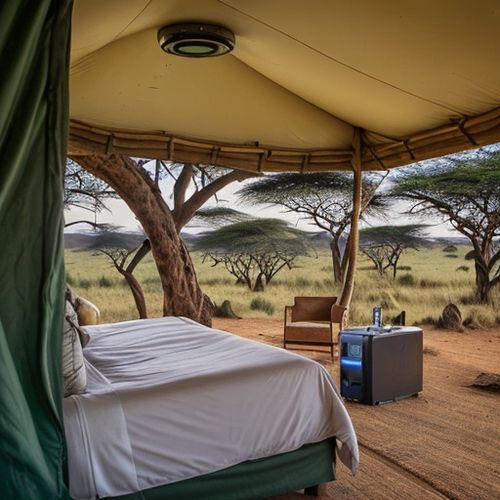
Traditional game drives no longer mean complete digital disconnection. Lodges that once proudly advertised "off-the-grid" experiences now discreetly offer solar charging stations shaped like acacia trees or hidden within replica termite mounds. The Lewa Wilderness Camp in northern Kenya pioneered this approach with their camel-mounted mobile charging units - a nod to both tradition and innovation. Guests returning from morning safaris find their camera batteries replenished using the same energy that powers the camp's kitchen and water systems.
Behind this charging revolution lies complex infrastructure challenges. Kenya's national parks cover nearly 8% of the country's landmass, with many premium safari locations deliberately avoiding grid connections to preserve the natural environment. Solar companies like D.light and M-KOPA have adapted their home energy systems for tourism use, creating modular power solutions that can be transported by Land Cruiser to remote tented camps. The system at Saruni Samburu uses concentrated solar mirrors that follow the sun's path while remaining invisible to wildlife.
The demand for reliable charging options has surged as modern travelers carry more electronic gear than ever before. Professional photographers may arrive with six camera bodies, three drones, and multiple lenses with stabilization systems - all requiring daily power. Meanwhile, ordinary tourists increasingly expect to livestream their leopard sightings or post sunset photos in real time. This created what industry insiders call "the battery anxiety phenomenon," where guests would ration device usage rather than miss documenting a potential Big Five encounter.
Innovative solutions have emerged from unexpected collaborations. A partnership between Kenya Wildlife Service and telecommunications provider Safaricom has installed discreet charging lockers at major park gates, allowing self-drive tourists to secure devices while exploring. These solar-powered stations resemble the traditional manyattas (homesteads) of local communities. Near Lake Nakuru, an abandoned ranger station has been converted into a charging cafe where visitors can sip arabica coffee while their gadgets power up, with proceeds funding anti-poaching patrols.
Nighttime power management presents unique challenges in safari environments. Camps must balance guest needs with strict light pollution regulations designed to protect nocturnal ecosystems. The result has been creative solutions like heat-activated charging pouches that only work during daylight hours, or battery exchange programs where guests swap depleted power banks for charged units at the camp's reception. At Angama Mara, overlooking the Great Rift Valley, guests receive elegantly crafted leather battery cases that charge via hidden solar panels sewn into the lodge's canvas roofing.
The environmental impact of this charging infrastructure receives careful scrutiny. Early adopters learned hard lessons when curious elephants damaged exposed cables or baboons stole shiny power banks. Current best practices involve burying cables at least two feet deep and using non-reflective, odorless materials that don't attract wildlife. Some camps have implemented "energy etiquette" briefings, educating guests about responsible device use in sensitive ecosystems. The Porini Camps chain calculates that their solar systems save approximately 28,000 liters of diesel annually across their properties.
Looking ahead, Kenya's safari charging solutions may become a blueprint for other wilderness destinations. Tanzanian operators have already begun adopting similar systems in the Serengeti, while Botswana's Okavango Delta lodges are testing water-resistant charging stations mounted on mokoro canoes. The innovations born from Kenya's unique combination of tech-savvy tourism and conservation priorities demonstrate how modern connectivity can coexist with pristine wilderness - provided the solutions respect the rhythm and rules of the natural world.
For travelers, this means the magic of unplugged safari moments can now be a choice rather than an imposition. The golden light of an African dawn can still be experienced without a screen between eye and horizon, but the memory can be instantly shared with loved ones back home. In the delicate balance between preservation and progress, Kenya's safari industry has found a way to keep both its landscapes and visitors powered up - one sunbeam at a time.

By Thomas Roberts/Apr 14, 2025

By Laura Wilson/Apr 14, 2025

By Jessica Lee/Apr 14, 2025

By Benjamin Evans/Apr 14, 2025

By George Bailey/Apr 14, 2025

By Emma Thompson/Apr 14, 2025
By John Smith/Apr 14, 2025

By Michael Brown/Apr 14, 2025
By Megan Clark/Apr 14, 2025

By Jessica Lee/Apr 14, 2025
By Sarah Davis/Apr 14, 2025

By Laura Wilson/Apr 14, 2025
By Sophia Lewis/Apr 14, 2025

By Natalie Campbell/Apr 14, 2025

By Eric Ward/Apr 14, 2025

By Laura Wilson/Apr 14, 2025

By Sophia Lewis/Apr 14, 2025

By George Bailey/Apr 14, 2025

By Laura Wilson/Apr 14, 2025

By Daniel Scott/Apr 14, 2025